



You are an adventurer, newly come to one of Eorzea’s grand city-states. Five years have passed since the Garlean Empire tore the moon Dalamud from the heavens in an attempt to conquer the Eorzean Alliance. Thankfully, for those who played the original Final Fantasy XIV, now known as FFXIV 1.0, the wait was not nearly so long.
The current version of Final Fantasy XIV is known as A Realm Reborn, originally a subtitle, but now how the community refers to the base game. It might be an MMORPG, but at its core, FFXIV is also a Final Fantasy game, intent on telling a rich story centered on the background, emotions, and conflicts of its characters.
This desire to stay true to the series’ core tenets caused several issues for writers and developers when approaching the main story quests (MSQ). In an MMO, your protagonist isn’t a singular person; you aren’t telling the story of Cloud or Tidus or Lightning as the player character. Your protagonist is one of millions of characters at any given time, necessitating you balance giving the player choices with putting them in an on-rails experience to tell a story.
It’s here we run into the first issue with A Realm Reborn: the player character, known as the Warrior of Light in the lore, is a literal blank canvas. There are only a few dialogue options to interact with NPCs throughout the entire game and post-patch content and none of them have any bearing on your journey or give you a personality. You are a mute puppet dancing on everyone's strings, content to nod at every request made of you. During the post-game story, one of the characters, Thancred, even makes fun of the solemn Warrior of Light for this, saying, “Or do you mean to give me another one of your stoic nods? You do, don’t you?”
Your sole choice in the game is which city-state you start in, which is still dictated by the class you choose during character creation. Where you begin your journey does matter in some ways. The lore you receive during the first chapter of your journey largely concerns the culture of the city-state. While you do acquire the same information in bits and pieces later, you get a more complex and complete picture depending on where you start.
The beastmen, tribes of intelligent and relatively humanoid beings, and the gods they summon, the primals, are the biggest source of conflict throughout the story. You learn a decent bit about them in the wooded fields of Gridania and the cutthroat desert of Ul’dah; however, this is not the case in the coastal Limsa Lominsa. You deal with former pirates who are trying to adjust to a new, honest lifestyle during the story. The storyline is still interesting but you might find yourself more confused than your compatriots in Gridania or Ul’Dah.
At the end of the day, it doesn’t really matter where you begin, but your favorites might form and understanding blossom better in one city-state versus another. If you really want to experience all three beginnings, this part of the story isn’t that long and you can gloss over common information after the first run.
From here, you launch into action at a decent pace. The goal of the story becomes leading you through basic lore and game mechanics while introducing you to the characters you’ll journey along with. Unfortunately, you can tell when they ran out of mechanics but still wanted to set the stage for future encounters when you’re dragged through a refugee camp and a haunted mansion, chasing down a lead on a cult of robed and masked people called Ascians.
Naturally, you learn nothing of import about the Ascians except that they’re sowers of chaos, which you could’ve already guessed from your earlier encounters. Little Ala Mhigo, a cave system of displaced citizens doesn’t have any bearing on the story for a long time, while the Haukke Manor subplot and dungeon are eerie but have nothing to do with the main story, now or ever.

Still, the ARR story’s true downfall is not in its desperation to give you more backstory or group content, it’s in the inane filler arcs they throw in during the mid to late levels. These chains blur into a long and aggravating series of fetch quests and meaningless conversations.
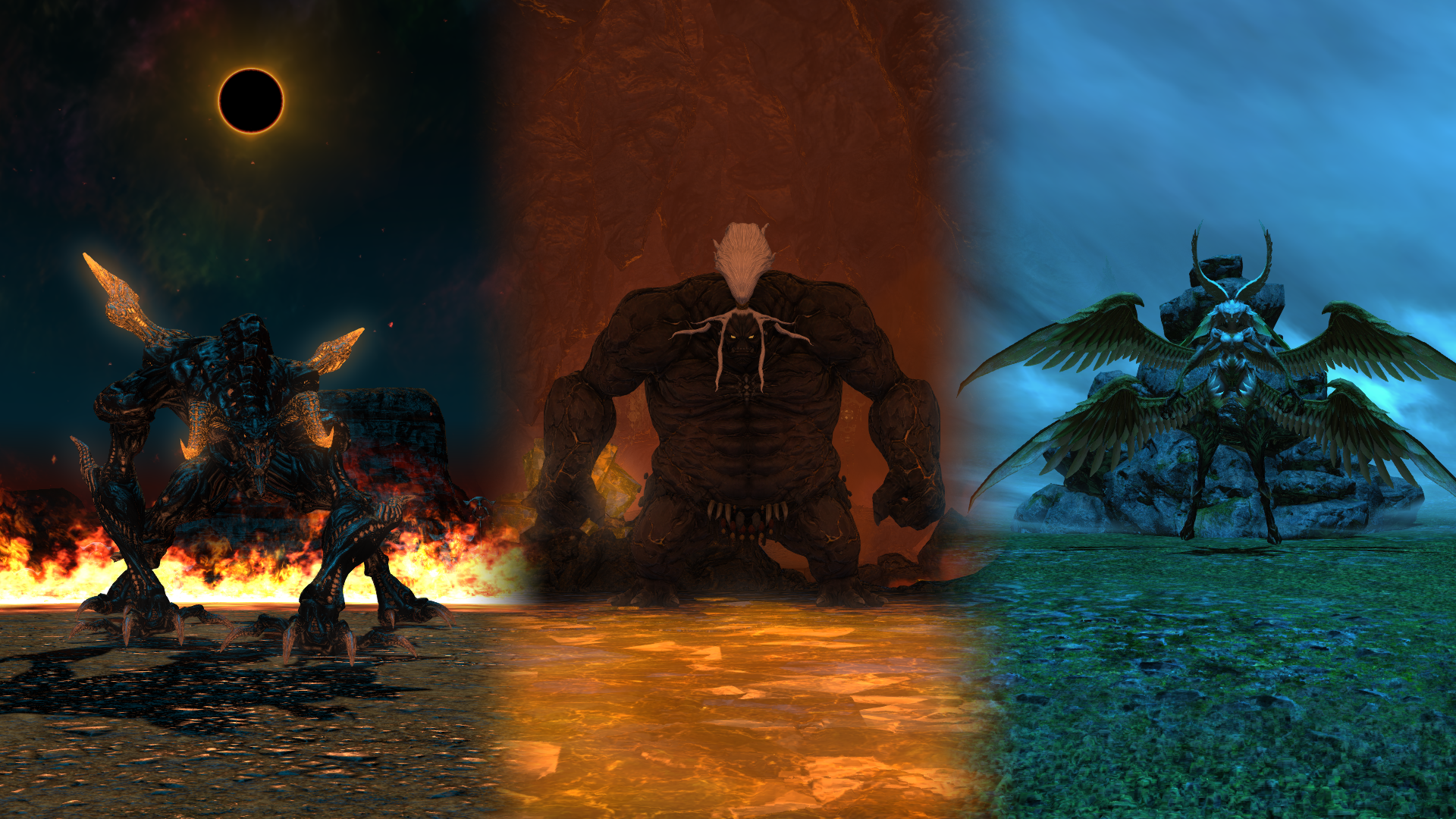
You learn the kobold beast tribe is trying to summon their earthen primal, Titan. Having already solved the issue of the player character becoming in thrall to a primal via their special gift, the Echo, they needed a new reason you couldn’t just run off and give ol’ Titan a pat on his rocky rump. The reason is that Titan is in the bowels of an exhaustive network of tunnels and it would take you a long time to find him the old-fashioned way. Worry not, the writers cooked up another way to locate Titan that takes just as long as it would’ve to scour every rock and pebble of the kobolds’ lair.
You search for a member of the Company of Heroes, an old band of people who bested Titan the last time he rose. They send you on no less than fifteen menial quests to kill random enemies and acquire food and wine for a banquet. That’s it. There’s no Mr. Miyagi trick here. They don’t want you to juggle oranges and pop bottles to train you to perform some crazy ritual that might help you reach Titan, no. You might cry that this arc is for levity or character development since your Scion associate, Y’sthola, does her damnedest to convince them you do not have time for their shenanigans, but I say this chain exists only to artificially gate your progress and fill up your experience bar using frivolous tasks.
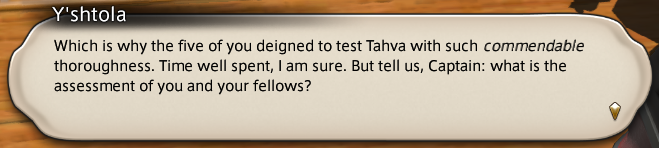
Ill content with one set of filler quests, the writers give you another chapter of them that has you discover a way to approach the wind primal Garuda. Your allies suggest the problem could be solved using a corrupted crystal of the opposing element. In a more modest string of eleven quests, you go from NPC to NPC to find the right kind of crystal. Because for some reason you would ask others for a tool to help defeat the biggest primal threat yet but not specify the manner of threat you’re going up against. And not only would you do this once, but twice. What’s worse is that the final NPC who points you to the ice-aspected crystal you need jokes that it’s still the wrong kind before throwing you a quick “Just kidding!” I am unamused. Thoroughly unamused.
I’d wager that these parts of the MSQ are when most people quit A Realm Reborn. It’s become a meme that ARR is easily FFXIV’s weakest storytelling, the veritable mountain you must climb before arriving at the heights of Heavensward, the first expansion. There are several reasons for this—the aforementioned necessity to introduce game mechanics through the story and the fact that ARR piggybacks off the failed FFXIV 1.0 among them. I don’t pretend to make excuses for this long, uninteresting trek through Eorzea, but, little consolation though it may be to players going through it, this is probably the biggest low point in the entire Final Fantasy XIV plot. Things do get better.
I also think it’s only fair to point out that the setup and premise are interesting, even if you don’t see a huge payoff in the base game. The beast tribes summon their primal gods because the races have broken peace with them and incited their aggression by pushing them from their lands and earmarking them for extermination, despite their intelligence and culture. You, Warrior of Light, are simply sowing more chaos in removing these threats.
Setting aside the primals, the ultimate threat of the story, the Garlean Empire, is far too hastily resolved (at least as it pertains to the base game). In fact, you manage to deal with six huge problems in a matter of two instances at the end of the game, amounting to about an hour and a half of content, including cutscenes. The antagonists are shown several times in cutscenes but we scarcely get a glimpse of their motivations or history before they whine about not getting the recognition they deserve or being scared to lose what they have in a clichéd speech before their demise.
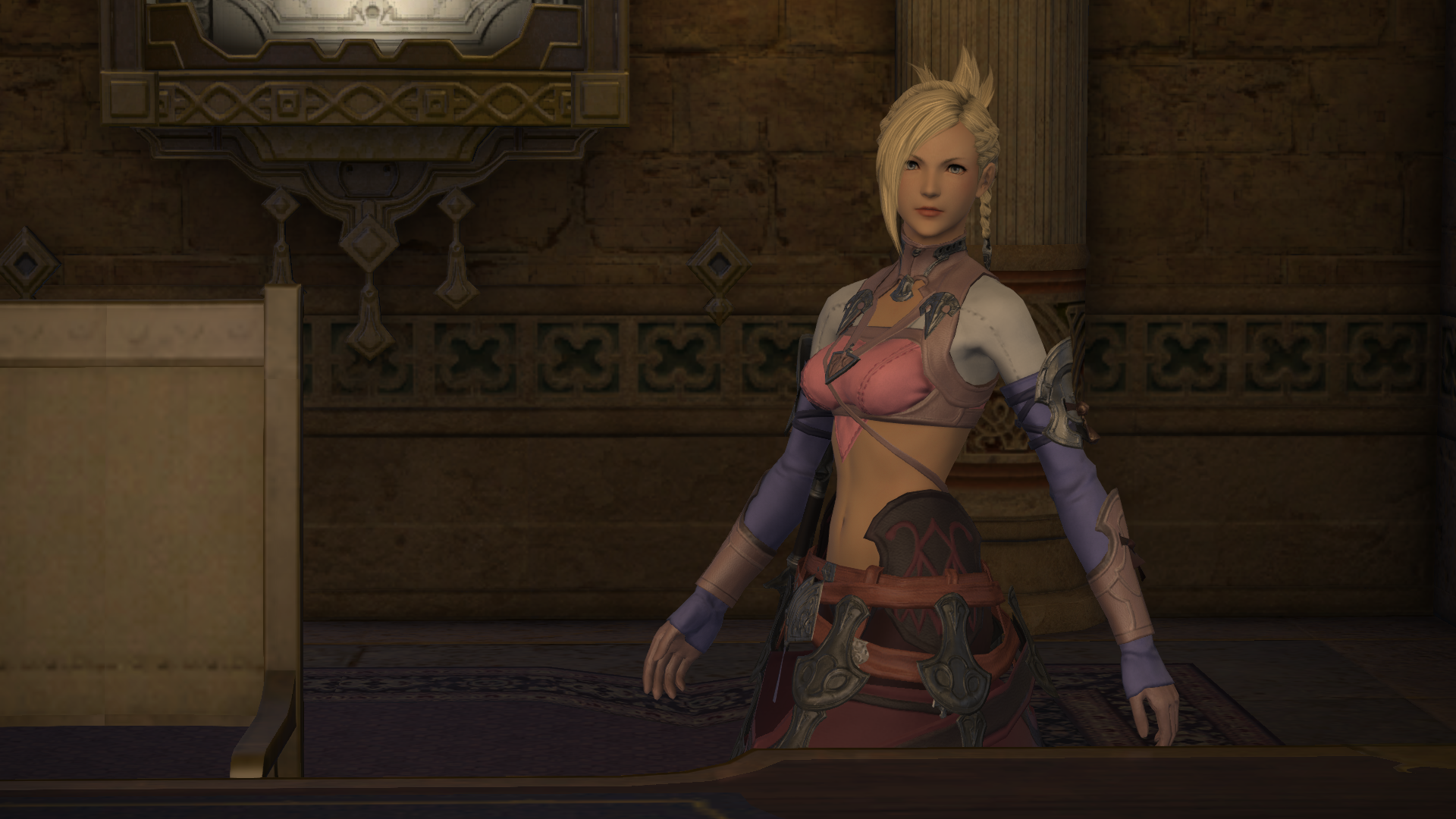
The allied characters are given more time and space to be fleshed out and if Final Fantasy games succeed in any way, it is character development. They’re not all as likable as the curious, clever, no-nonsense Y’shtola, bless her furry ears, or the charming, witty Thancred, but they usually evolve. Unfortunately, the Scions Yda and Papalymo never get time to shine in their own right since the writing focuses more on their dynamic as a duo. Yda’s simple-mindedness and Papalymo’s seriousness clash, causing them to bicker all the time.
The leader of the Scions is a victim of ‘tell, don’t show’ in that she is touted as a capable leader, but you never see her do much of anything. The issue is not that she always asks you to return to the Waking Sands to tell you something that could’ve been said over linkpearl (your magitek mobile phone) or her lack of fighting capability, but rather that you don’t see her researching or handling bureaucratic matters. Rather, you see her delegate these things to you or to another Scion or occasionally hear about how she did something off-screen. She’s even keen to point out her overreliance on you in the post-patch content, before happily sending you off to perform another task.
At the end of the day, A Realm Reborn tries to do too much. They set out to put a JRPG in an MMO’s body and the combination fails in predictable ways. They needed to shoehorn in enough quests to fit a level cap, provide you with vital mechanics and information within the context of an immersive plot, and create a basis for future stories.
But, in a way, they succeeded too. They recovered from their disastrous 1.0 launch, molded realistic characters, some flawed and unlikeable, but developed, and perhaps most importantly, they learned from their mistakes. Game developers don’t always mix genres for obvious reasons: it subverts expectations and creates mechanical difficulties to overcome. But, if you can get past the early missteps of A Realm Reborn, Final Fantasy XIV as a whole manages the magicteknical marvel of combining Final Fantasy with MMORPG to great effect.
About Phoenix Uprising • Recurring Series • Support the Site • Contact • Editorial Guidelines • Privacy Policy
© 2022 Phoenix Uprising. All rights reserved.
About Phoenix Uprising • Recurring Series • Support the Site
Contact • Editorial Guidelines • Privacy Policy
© 2023 Phoenix Uprising.
All rights reserved.
Couldnt have said it better myself